Understanding your hydration needs, optimizing your daily water intake, and maintaining overall health are crucial for your well-being. A water intake calculator can simplify this process, providing tailored recommendations based on your unique factors. By considering elements such as your weight, activity level, and climate, you can gain insights into how much water you really need. But what specific benefits can this tool offer, and how does it fit into your daily routine?
Key Takeaways
- Use a hydration calculator to determine your daily water needs based on weight, activity level, and climate conditions.
- Remember that active individuals or those in hot climates typically require more water than the standard recommendation.
- Monitor thirst and urine color to gauge your hydration status and adjust intake accordingly.
- Incorporate foods with high water content, like fruits and vegetables, to help meet your hydration goals.
- Set reminders or use apps to track your water intake and stay committed to proper hydration.
How to Calculate Your Daily Water Needs
How do you know if you’re drinking enough water each day? Start by using hydration equations, which can help you calculate your daily needs based on factors like weight, activity level, and climate.
A common recommendation is to drink half your body weight in ounces. For instance, if you weigh 160 pounds, aim for about 80 ounces daily.
Remember, these daily recommendations can vary—active individuals or those in hot climates might need more.
Daily hydration needs can differ; those who are active or live in warmer climates may require additional water.
Pay attention to your body’s signals, too; thirst and urine color are key indicators of hydration status.
By understanding your specific needs, you’ll feel more energized and focused throughout the day.
How a Water Intake Calculator Can Help You
A water intake calculator can be a game-changer for anyone looking to optimize their hydration. By inputting your personal details, you can receive tailored recommendations that fit your lifestyle.
Hydration apps often include daily reminders, nudging you to drink water throughout the day. This can make a huge difference, especially when you’re busy or distracted.
Tracking your intake helps you stay accountable, ensuring you meet your hydration goals. Plus, many calculators provide insights into how hydration affects your overall health, energy levels, and even mood.
With consistent use, you’ll develop a better understanding of your body’s needs. Embrace this tool, and you’ll find it easier to make hydration a priority in your daily routine.
Factors That Affect Your Hydration Needs
Understanding the factors that affect your hydration needs is crucial for maintaining optimal health. Several elements play a role in how much water you should drink daily.
| Factor | Explanation |
|---|---|
| Climate Impact | Hotter climates increase your fluid loss. |
| Health Conditions | Conditions like diabetes or fever require more hydration. |
| Age Factors | Older adults may need more water due to decreased thirst. |
| Diet Influence | High-salt or high-protein diets can raise your water needs. |
| Exercise Intensity | Strenuous workouts demand additional hydration. |
Your body composition and environmental conditions, such as altitude effects, also influence your hydration. By considering these factors, you can better tailor your water intake for your personal needs.
Benefits of Staying Hydrated Daily
Staying hydrated daily offers numerous benefits that can significantly enhance your overall well-being. When you drink enough water, you boost your energy levels and improve your focus, making it easier to tackle daily tasks.
Proper hydration supports digestion and helps maintain healthy skin, giving you that radiant glow you crave. Additionally, staying hydrated can help regulate your body temperature and promote joint health, reducing discomfort during physical activities.
With these hydration benefits, you’re not just quenching your thirst; you’re investing in your daily wellness. Remember, even mild dehydration can affect your mood and cognitive function, so keep that water bottle close.
Embrace these benefits, and your body will thank you for it!
Using a Water Intake Calculator Made Easy
While you may know the importance of hydration, using a water intake calculator can simplify the process of determining how much water you need each day.
These calculators often come with user-friendly features that make inputting your age, weight, and activity level a breeze. By providing personalized recommendations, they enhance your user experience, ensuring you stay on track.
Plus, many calculators allow you to set reminders, helping you develop a consistent hydration habit. When you see your daily goals laid out, it feels more achievable.
Debunking Common Hydration Myths
Many people believe common hydration myths that can mislead their understanding of how much water they really need. Let’s clear up a few hydration misconceptions:
| Myth | Truth |
|---|---|
| You need to drink 8 glasses daily | Hydration needs vary by individual. |
| All fluids count as hydration | Water is best, but other fluids help. |
| You can’t hydrate with food | Many foods have high water content. |
Understanding these water intake myths is crucial for your health. Instead of fixating on a specific number, listen to your body. Thirst is a natural indicator, and staying hydrated doesn’t always mean gulping down plain water. Focus on balance, and you’ll find your ideal hydration level.
Hydration Needs for Active vs. Sedentary Lifestyles
Hydration needs can drastically differ based on your lifestyle. If you lead an active life, your fluid requirements increase significantly due to the exercise impact on your body. Engaging in regular physical activity causes you to sweat more, necessitating active hydration to maintain optimal performance and recovery.
On the other hand, if your lifestyle is more sedentary, your hydration needs are lower. Sedentary hydration focuses on maintaining basic bodily functions without the added strain of intense activity.
Understanding these lifestyle differences is crucial. You mightn’t need to drink as much if you’re not exercising, but staying aware of your fluid intake is still vital for overall health.
Balancing your hydration based on activity level can make all the difference.
Tips for Increasing Your Daily Water Intake
If you often find yourself forgetting to drink enough water throughout the day, implementing a few simple strategies can help boost your intake.
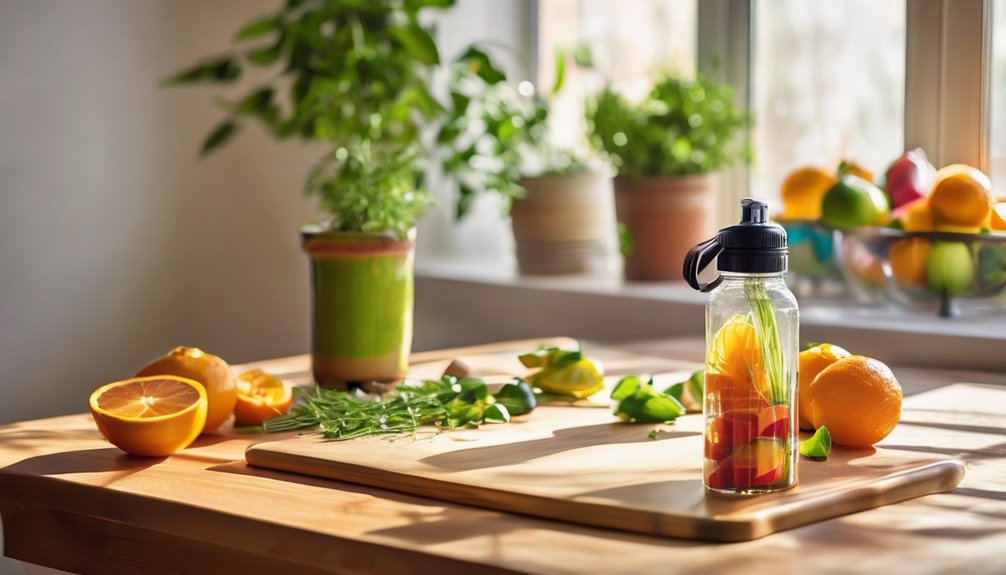
Try adding flavorful infusions, like fruits or herbs, to make your water more enticing. Use creative containers that inspire you to sip regularly, and set hydration reminders on your phone or with hydration apps.
Enhance your hydration by infusing water with fruits or herbs, using inspiring containers, and setting reminders to sip regularly.
Consider joining hydration challenges with friends to keep your motivation high. Incorporate water-rich foods, such as cucumbers or watermelon, into your meals for an extra hydration boost.
Lastly, practice mindful sipping—take a moment to enjoy each sip and feel the refreshment. With these tips, staying hydrated will become a delightful part of your daily routine.
Tracking Your Hydration Progress and Making Adjustments
Tracking your hydration progress can significantly enhance your overall wellness, as it allows you to identify patterns and make necessary adjustments.
By incorporating hydration journaling into your daily routine, you can gain insights into your drinking habits and how they affect your well-being. Use a simple app or a notebook to record your water intake, noting how you feel throughout the day.
This progress tracking not only keeps you accountable but also helps you spot trends—maybe you notice you feel more energetic on days you hit your targets. If you’re falling short, adjust your routine or set reminders.
Frequently Asked Questions
Can I Count Other Beverages Towards My Water Intake?
Yes, you can count other beverages towards your hydration sources! While water’s best, drinks like herbal teas and even coffee contribute. Just be cautious with sugary or caffeinated beverage types that can dehydrate you.
What Are the Signs of Dehydration to Watch For?
Watch for dehydration symptoms like dry mouth, fatigue, dizziness, or dark urine. To stay hydrated, sip water regularly and eat water-rich foods. Remember, your body needs proper hydration to thrive and feel its best.
How Do Age and Gender Affect Hydration Needs?
Age differences and gender variations significantly affect hydration needs. As you age, your body’s water content decreases, while men typically require more fluids than women. Staying attuned to these factors helps you maintain optimal hydration.
Is It Possible to Overhydrate?
Yes, you can overhydrate. While hydration myths abound, symptoms like headaches and confusion signal excess water. Remember, even the mighty can falter; balance is key to staying refreshed without drowning in your own fluid.
Can Certain Foods Contribute to My Daily Water Intake?
Absolutely! Fruits like watermelon and oranges boost your fruit hydration, while veggies like cucumbers and lettuce add vegetable moisture. These delicious options not only hydrate you but also provide essential nutrients for your well-being.
Conclusion
So, if you think you can survive on a couple of sips and a coffee or two, think again! Your body isn’t a cactus, and it won’t thrive in the desert of dehydration. Grab that water bottle, channel your inner hydration superhero, and calculate your needs. Remember, staying hydrated isn’t just a trend—it’s a lifestyle. So, raise your glass (of water, please), and toast to your health and vitality! Cheers to hydration, not desperation!