A weekly meal planner can streamline your meals, enhance your nutrition, and support your weight loss goals. By organizing your meals, you’ll reduce impulsive choices, save time, and maintain portion control. Understanding how to create an effective planner is key, but knowing what ingredients to choose can make all the difference. As you explore strategies to build your plan, consider how these elements can transform your approach to healthy eating.
Key Takeaways
- Plan meals that include a balance of proteins, whole grains, and plenty of fruits and vegetables for optimal nutrition.
- Create a grocery list based on your meal plan to avoid impulse purchases and ensure you have healthy options available.
- Incorporate variety in your meals to keep things exciting and prevent boredom, which can lead to unhealthy choices.
- Practice portion control by using measuring tools and meal containers to help manage serving sizes effectively.
- Adjust meal plans as needed, trying new recipes and increasing fiber-rich foods to enhance satiety and support weight loss.
Why Use a Weekly Meal Planner for Weight Loss?
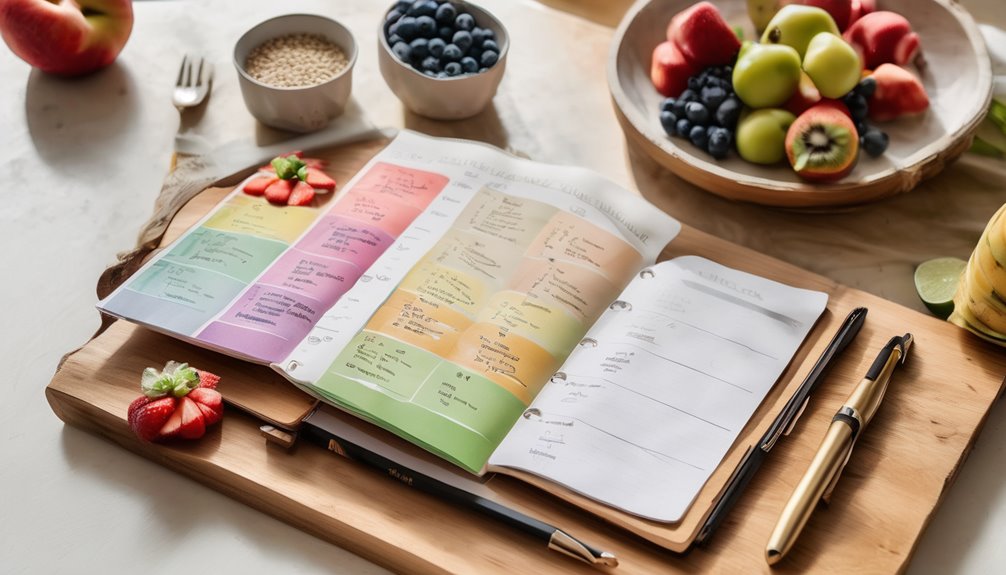
When you’re trying to lose weight, using a weekly meal planner can make a significant difference in your success. By embracing meal planning benefits, you streamline your food choices, reducing impulsive eating.
Weekly organization helps you stay on track, ensuring you’re prepared with healthy options when hunger strikes. This structure means fewer last-minute takeout decisions, which often derail your progress.
Plus, planning meals in advance allows you to focus on balanced nutrition, making it easier to incorporate fruits, veggies, and lean proteins.
You’ll also save time and money, as shopping becomes more efficient when you know exactly what you need.
Ultimately, a weekly meal planner empowers you, turning your weight loss journey into a manageable, enjoyable process.
How to Create Your Weekly Meal Planner
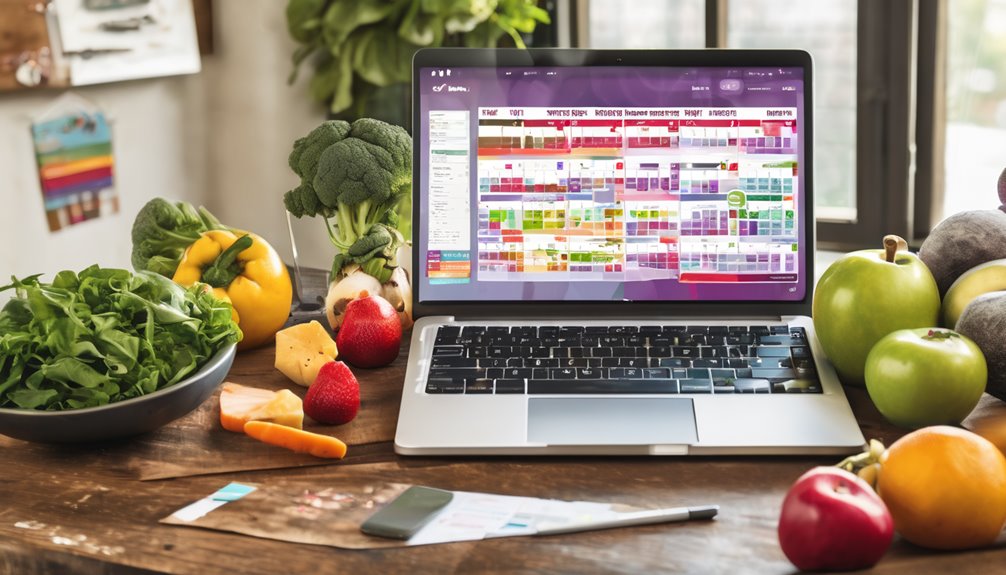
Creating a weekly meal planner can be straightforward and rewarding, especially if you follow a few key steps. Start by choosing a day to plan your meals for the week. Consider your schedule and include a meal variety that excites you.
Focus on balancing proteins, whole grains, and plenty of fruits and vegetables. Once you’ve mapped out your meals, create a grocery shopping list based on your selections. This ensures you have everything on hand and minimizes impulse buys.
Don’t forget to account for snacks and quick meals to keep your energy up. By planning ahead, you’ll not only stay on track with your weight loss goals but also enjoy the process of cooking and eating healthy.
Smart Tips for Choosing Nutritious Ingredients
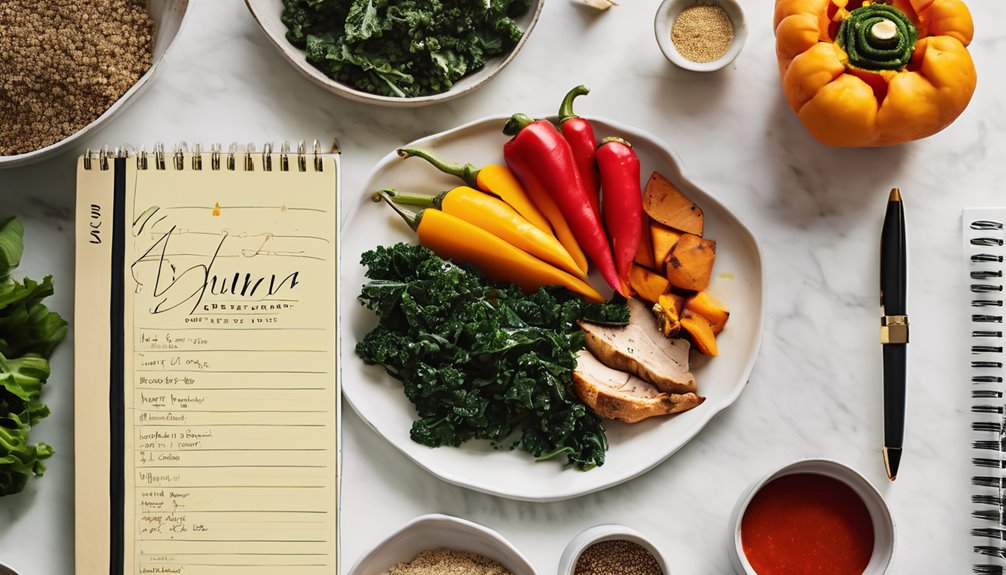
Choosing nutritious ingredients is crucial for your weight loss journey, and a few smart tips can make all the difference.
Focus on nutrient density; choose foods that pack a punch in vitamins and minerals without empty calories. Embrace ingredient variety to keep your meals interesting and satisfying.
Prioritize nutrient-dense foods to maximize vitamins and minerals while keeping meals diverse and enjoyable.
Seasonal selections not only taste better but are often more budget-friendly, so don’t hesitate to explore local markets. Whole foods, like fruits, vegetables, whole grains, and lean proteins, should be your go-to choices.
Practice mindful shopping—create a list and stick to it to avoid impulse buys.
Lastly, look for budget-friendly options like frozen fruits or bulk grains; they’re just as nutritious and can help you save while staying healthy.
Portion Control: Managing Serving Sizes
Understanding how to manage serving sizes is just as important as selecting nutritious ingredients. When you practice mindful eating, you become more aware of your body’s hunger cues and can avoid overeating.
Start by familiarizing yourself with standard serving sizes; this helps combat portion distortion, where we often underestimate how much we consume. Use tools like measuring cups or a food scale to get an accurate idea of what a true serving looks like.
Keeping a food diary can also enhance your calorie awareness, allowing you to track your intake more effectively. Remember, it’s not just about what you eat, but how much you eat.
Meal Prep for Perfect Portions
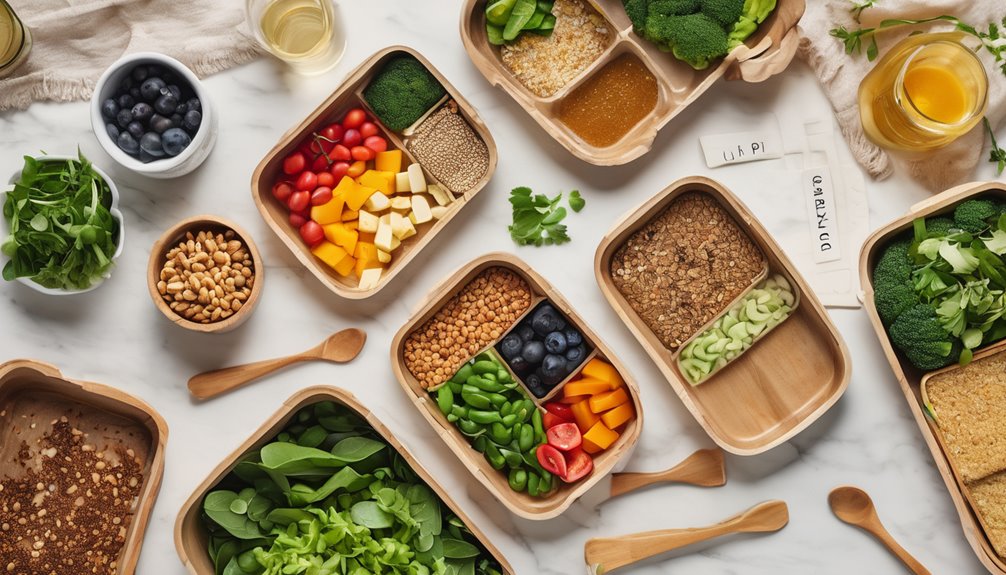
Meal prepping can be a game changer for achieving perfect portions. By carefully measuring portion sizes in meal containers, you’ll set yourself up for success.
Start with balanced meals that include protein, healthy fats, and plenty of veggies. Use effective food prep techniques like batch cooking or roasting to simplify your week.
Kickstart your meal prep with balanced plates featuring protein, healthy fats, and vibrant veggies for a simplified week ahead.
Don’t forget to track calories; it helps maintain accountability. Experiment with ingredient swaps to keep things interesting while sticking to your goals.
For satisfying snack ideas, portion out nuts or cut up fruits and veggies in advance.
With these strategies, you’ll not only enjoy delicious meals but also stay on track with your weight loss journey. Happy prepping!
Essential Components of a Weight Loss Meal Plan
A successful weight loss meal plan hinges on a few essential components that work together to promote health and sustainability.
To achieve caloric balance while maximizing nutrient density, focus on these key elements:
- Whole Foods: Prioritize fruits, vegetables, whole grains, and lean proteins.
- Portion Control: Keep your servings in check to maintain a caloric deficit.
- Balanced Macronutrients: Include a proper mix of carbs, proteins, and fats in each meal.
- Hydration: Drink plenty of water to support metabolism and curb cravings.
- Meal Variety: Incorporate different foods to ensure you get a range of nutrients.
Easy and Healthy Recipes for Your Meal Plan
Incorporating easy and healthy recipes into your weight loss meal plan can make a significant difference in your journey. Focus on quick snacks and flavorful salads that keep you satisfied without breaking the bank. Use seasonal ingredients for freshness, and explore diverse cuisines to keep meals exciting. Here’s a handy table to inspire your meal planning:
| Meal Type | Ideas |
|---|---|
| Quick Snacks | Hummus and veggie sticks |
| Flavorful Salads | Quinoa and black bean salad |
| Protein Sources | Grilled chicken or tofu |
| Low Carb Options | Zucchini noodles |
Consider meal swaps and easy dressings to elevate your family-friendly meals. With these tips, you’ll enjoy a budget-friendly approach to healthy eating!
Adjusting Your Meal Plan for Plateaus?
When you hit a weight loss plateau, it can feel discouraging, but adjusting your meal plan can reignite your progress.
Hitting a weight loss plateau can be frustrating, but refreshing your meal plan can spark renewed progress.
Implementing effective plateau strategies helps you break through and reach your goals. Here are some practical meal adjustments to consider:
- Increase protein intake to boost satiety and metabolism.
- Reduce portion sizes slightly to create a calorie deficit.
- Incorporate more fiber-rich foods to keep you feeling full longer.
- Try new recipes to keep things exciting and prevent boredom.
- Stay hydrated; sometimes thirst can mask hunger.
Staying Motivated: Tracking Your Progress
Tracking your progress can significantly boost your motivation as you pursue your weight loss goals. By setting specific, measurable goals, you create a clear path to success. Use these motivation techniques to keep yourself on track:
| Tracking Method | Purpose |
|---|---|
| Weight Log | See weight changes |
| Meal Journal | Identify eating habits |
| Fitness Tracker | Monitor activity levels |
Regularly reviewing these can help you celebrate small victories, keeping your spirits high. Remember, each step counts. Share your progress with a friend or join a community for added support. Staying connected can enhance accountability, making your journey feel less lonely and more rewarding. You’re not just losing weight; you’re building a healthier you.
Avoid These Common Meal Planning Mistakes
Meal planning can be a powerful tool for weight loss, but mistakes can derail your efforts. To maximize your success, keep these common pitfalls in mind:
- Skipping grocery shopping: Without a list, you’re more likely to buy unhealthy options.
- Overcomplicating meals: Simple, nutritious meals are easier to stick with.
- Neglecting portion control: Pay attention to serving sizes to avoid overeating.
- Not prepping ahead: Take time to meal prep; it saves you from unhealthy choices during busy days.
- Ignoring variety: Eating the same meals can become boring and lead to cravings.
Frequently Asked Questions
Can I Still Eat Out While Following a Meal Planner?
Yes, you can still eat out! Focus on smart restaurant choices, like grilled options or salads, and practice portion control by sharing dishes or taking leftovers home. Enjoying meals out is possible while staying on track.
How Do I Handle Cravings During a Weight Loss Plan?
When Sarah felt cravings for chocolate, she identified her craving triggers and opted for dark chocolate-covered almonds instead. By choosing healthy substitutions, you can satisfy cravings without derailing your weight loss journey.
What Snacks Are Best for Weight Loss?
For weight loss, opt for healthy snack ideas like veggies with hummus, Greek yogurt, or a handful of nuts. Remember, practicing portion control keeps your cravings in check and helps maintain your progress. Enjoy!
How Often Should I Adjust My Meal Plan?
Like a river shapes its banks, you should adjust your meal plan frequency every few weeks. By tweaking portions and ingredients, you’ll better align with your goals, ensuring sustained progress and enjoyment in your journey.
Are There Any Specific Diets That Work Best With Meal Planning?
Keto meal planning and vegan meal prep both work well for structured eating. Each offers unique benefits: keto emphasizes low carbs for fat loss, while vegan focuses on whole foods for health. Choose what suits you best!
Conclusion
In conclusion, a weekly meal planner isn’t just a fancy piece of paper; it’s your culinary GPS guiding you away from fast food temptations and into the land of nutritious delights. Sure, it might feel like you’re prepping for a cooking show, but remember, even chefs don’t whip up gourmet meals every day! Embrace the simplicity of planning, and soon you’ll be the proud owner of a fridge full of health—no more potato chip “salads” in sight!