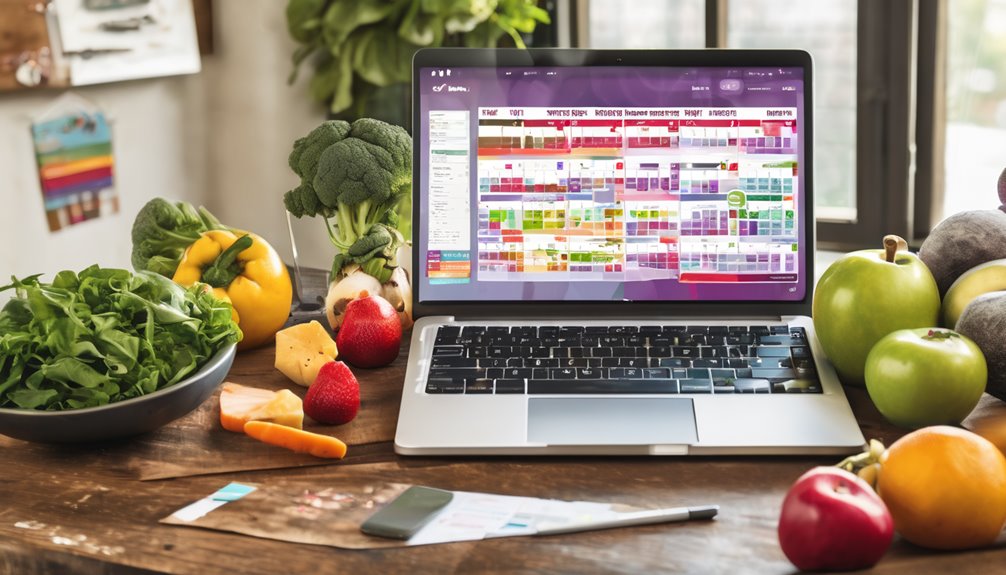
Creating a healthy meal planner for weight loss can significantly impact your success. By focusing on portion control and incorporating nutrient-dense foods, you’ll find balanced meals that keep you satisfied. Mindful eating practices can help you recognize when you’re full. But where do you start? Understanding the essential foods and effective meal prep strategies is crucial for maintaining a sustainable routine. Let’s explore how to make this journey easier and more enjoyable for you.
Key Takeaways
- Create a meal plan incorporating nutrient-dense superfoods, lean proteins, and healthy fats to support weight loss and overall health.
- Focus on portion control and mindful eating practices to enhance meal satisfaction and recognize fullness cues.
- Implement batch cooking and meal prep strategies to save time and maintain consistency in your healthy eating routine.
- Customize your meal plan based on individual caloric needs, dietary restrictions, and food preferences for better adherence and enjoyment.
- Stay motivated by setting achievable goals, celebrating milestones, and emphasizing progress over perfection in your weight loss journey.
Step-By-Step Guide to Crafting a Balanced Meal Plan for Weight Loss
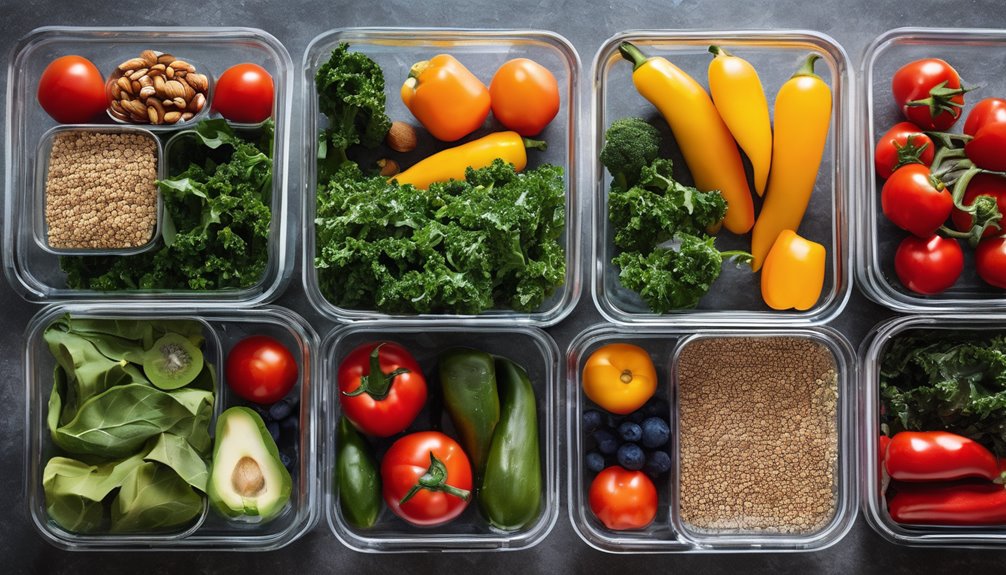
Creating a balanced meal plan for weight loss can be straightforward if you follow a few essential steps.
Start by focusing on portion control; it’s crucial for managing your calorie intake. Use smaller plates to help visualize appropriate servings.
Next, practice mindful eating—slow down and savor each bite. This not only enhances your enjoyment but also helps you recognize when you’re full.
Practicing mindful eating allows you to truly enjoy your meals and better tune into your body’s hunger signals.
Incorporate a variety of foods to ensure you get all the nutrients your body needs. Aim for colorful fruits and vegetables, lean proteins, and whole grains.
By planning your meals in advance, you’ll avoid last-minute unhealthy choices.
Essential Foods for Your Meal Plan
To make your meal plan effective, it’s important to include foods that support both your nutritional needs and weight loss goals.
Start with nutrient-dense superfoods like kale, blueberries, and quinoa. These powerhouse ingredients not only pack vitamins and minerals but also offer superfoods benefits such as boosting metabolism and reducing cravings.
Pair these with lean proteins, like chicken or tofu, to keep you full longer. Remember, portion control is key; even healthy foods can lead to weight gain if you overeat.
Incorporating healthy fats from avocados or nuts can enhance satiety, making it easier to stick to your plan.
Focus on balance and variety to create meals that nourish and satisfy you on your weight loss journey.
Meal Prep Tips to Save Time
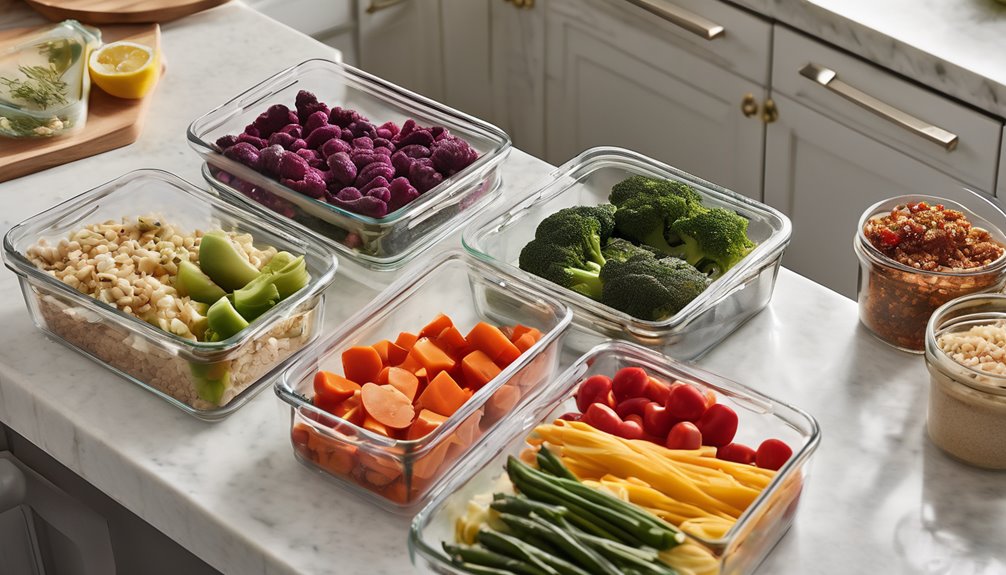
While meal prepping might seem daunting at first, it can save you significant time during the week and keep you on track with your weight loss goals.
Start by embracing batch cooking; prepare large quantities of staples like grains, proteins, and vegetables. This way, you’ll have ready-to-go components for various meals.
Use time-saving techniques like chopping veggies in advance or utilizing a slow cooker for hands-off cooking. Invest in quality storage containers to keep your meals fresh and organized.
Designate a specific day for meal prep to establish a routine, making it feel less overwhelming.
Customizing Your Meal Plan for Dietary Needs
Customizing your meal plan for dietary needs is essential for achieving sustainable weight loss and overall health.
Start by assessing your caloric needs and how they align with your weight loss goals. Incorporate portion control to help regulate your intake without feeling deprived.
Assess your caloric needs to align with weight loss goals, and use portion control to enjoy meals without deprivation.
Consider any dietary restrictions you may have, whether they’re due to allergies, intolerances, or personal choices. Remember to include your food preferences—eating should be enjoyable!
Focus on nutrient timing; eating at optimal times can enhance energy and recovery.
Finally, prioritize meal variety to ensure you receive a range of nutrients and keep your meals exciting.
Stay Motivated on Your Weight Loss Journey
Staying motivated on your weight loss journey is crucial, especially when the initial excitement starts to wane. Here are some practical tips to keep you on track:
| Tip | Description | Example |
|---|---|---|
| Mindful Eating | Pay attention to your hunger cues. | Eat slowly and savor each bite. |
| Positive Affirmations | Reinforce your commitment. | “I am strong and capable.” |
| Set Small Goals | Break your journey into achievable steps. | Aim to lose 1-2 pounds per week. |
| Celebrate Progress | Acknowledge every milestone. | Treat yourself to a new workout outfit. |
Incorporating these strategies can help you stay focused and connected to your weight loss goals. Remember, it’s about progress, not perfection.
Frequently Asked Questions
How Often Should I Change My Meal Plan?
You should adjust your meal plan every few weeks based on your progress and preferences. Meal plan frequency can boost motivation, ensuring you stay engaged and satisfied. Listen to your body and make necessary changes.
Can I Indulge in Treats While Losing Weight?
Absolutely, you can indulge in treats while losing weight! Studies show that 80% of dieters succeed with occasional guilt-free desserts. Just practice portion control, and you’ll enjoy those sweet moments without derailing your progress.
What Are Healthy Snacks for Weight Loss?
For healthy snacks, focus on nutrient-dense options like veggies with hummus, Greek yogurt, or nuts. Practice portion control to enjoy treats without sabotaging your goals. You can indulge mindfully and still stay on track.
How Do I Handle Eating Out on My Meal Plan?
When you eat out, focus on portion control and smart menu choices. Opt for grilled options, share dishes, or ask for smaller servings. Staying mindful helps you enjoy dining out while sticking to your goals.
Is Intermittent Fasting Effective for Weight Loss?
Intermittent fasting can be effective for weight loss, as it encourages meal timing strategies that help regulate hunger. You’ll enjoy the benefits of improved metabolism and enhanced focus, making it a practical choice for you.
Conclusion
Embarking on your weight loss journey doesn’t have to feel like a daunting uphill battle. By embracing a healthy meal planner, you’re not just counting calories—you’re inviting nourishment into your life. With balanced meals, mindful eating, and smart prep strategies, you’ll find joy in the process. Remember, every small step leads to meaningful change, and with a sprinkle of patience, you’ll soon discover the vibrant, healthier version of yourself waiting just around the corner.